Showing posts with label teaching. Show all posts

Friday, December 7, 2012

The "Paperdigm" Grand Narrative


Despite the fact that there is a strong push to include multimodal writing with new media in the writing classroom, there is still a significant amount of fear on the part of institutions and teachers alike about how it will change writing as we know it today. In many ways, these fears are rational. If we ask students to start writing in digital spaces, then their projects and assignments are no longer going to resemble the 8 ½ x 11 sheet of white paper we are comfortable with. Not only does multimodal writing challenge students, but it also challenges us as instructors to accept something different. We can see this discomfort easily in the example Jody Shipka provides where a teacher asks, “‘I see how this gets students thinking creatively, but where is the writing? When and what, exactly, are students expected to write’” (140). In this instance, the woman who asked this question could not “see” the “writing” a student did for a research project that was presented as a game similar to Trivial Pursuit. As Shipka explains, “I would surmise that what she was expecting to see, indeed, what she was referring to as ‘writing’ was double-spaced, alphabetic text composed with a twelve-point font, printed on white 8 ½ x 11” paper” (140). This is what we have come to expect as instructors. When we start talking about multimodality, we start talking about projects, assignments, and “essays,” that don’t have to look like traditional papers and that scares us. It makes us uncomfortable because as a field, we have come to value alphabetic print over everything else.
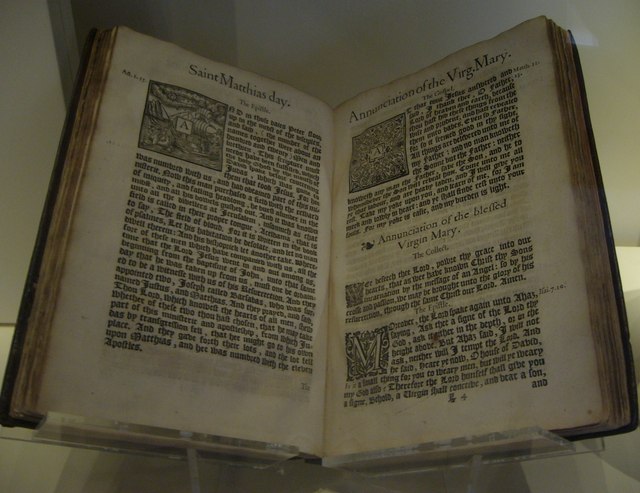
Image Courtesy of this site
One thing we cling to in the humanities is the static nature of our texts. Once something has been written and printed, be that for a class or a published piece of work, we see it as unchangeable. This lends a certain amount of credibility to the work that we have decided to value. Although different editions of books can be published and papers can be revised, there is always a paper trail. Dennis Baron writes, “A writer’s reputation, or that of a publisher, predisposes readers to accept certain texts as authoritative, and to reject others. Provenance, in the world of conventional documents, is everything. We have learned to trust writing that leaves a paper trail” (29). Of course most forms of digital writing feature the ability to track revisions, but those revisions are not always made public to the reader and nobody has to approve or validate those revisions. As Baron makes clear, we value the authority of publication. In the humanities, we see publication as a seal of authentication—somebody thinks this is right and worth reading. Digital writing does require that same seal. Anybody, including me, can create a blog and write whatever they want. It can also be changed on any whim, and two readers, minutes part, might not read the same text. Richard Lanham adds, “We have proverbialized black-and-white expression as a guarantee of truth (‘I’ve got it down here in black-and-white!’), but the proverbs can’t hide the technological base of this metaphysical verity. ‘Black and white,’ like print technology as a whole, works by sensory exclusion; there is nothing intrinsically truthful about such a technique” (157). In other words, even print publications cannot tell the whole truth. There are things that are removed and left-out. But as a culture, and as a field of study, we have come to rely on the authority of black-and-white text and it is difficult to imagine an always changing digital text as having the same credibility to offer.  

According to Jeff Rice, the humanities, and composition studies specifically, can trace this value of alphabetic texts back to 1963 and what he refers to as the “grand narrative.” In The Rhetoric of Cool: Composition Studies and New Media, Rice explains, “North creates, intentionally or not, a modernist grand narrative regarding the field (a permanent theme), one that stresses more or less a moment centered on a unified theory of empirical (or scientific-oriented) research, one that has found a home in many subsequent discussions and publications on composition studies history” (15). What Rice means is that in 1963, the “supposed rebirth” of compositions studies, the narrative told by North failed to mention “technology, cultural studies, and visual writing” (11,13). This limited the field of composition, then, to the monomodal, alphabetic text that we still teach today, and specifically to our emphasis on the empirical or the objective. Striving to try and be considered “scientific” or at least equal to “scientific,” the field of composition studies focused on being formal and objective. Ultimately, this emphasis results in what Rice, via Ted Nelson, refers to as the “paperdigm.” Rice writes, “The paperdigm limits technological integration into writing, for writers (and educators) expect writing machines to duplicate the familiar and ubiquitous writing practices we normally engage with in print culture…Merely uploading print documents to the Web or engaging in file sharing does not allow writers the ability to rhetorically work with new media; instead such writing duplicates the logic of print in structure, content and delivery” (81). Since the grand narrative neglected “technology” and “visual writing,” even when we try to use new media in the classroom, we expect it to resemble what we would normally encounter with print media. What happens, though, as Rice points out, is educators think just having students upload a file previously written in a word processor is the same as having them create a piece of digital writing that really demands the use of the medium. That’s not the case. As I discussed in “TechnologyUse in the Classroom,” merely using technology is not enough. To truly integrate new media requires that we break away from our reliance on the “grand narrative” and our comfort with the “paperdigm.” For example, check out this person's idea of a "Grand Narrative."

Technology and Literacy
Photo Courtesy of this site
In order for the humanities to start playing the digital game, it will require a revision of our concept of writing. This means loosening our preconceptions that print is everything and that something has to be published by a publisher to be valued. Hidden behind these fears and discomforts are, of course, other issues of copyright and money. But ultimately, it means we need to revise the idea of writing in our classrooms. It doesn’t make sense to keep asking students to write traditional essays and claim it has “real-world” application. I agree with Dana Wilbur, who writes, “Learning is much more likely to transfer, too, when students read and write in the classroom in ways similar to how they do outside of schools” (81). It would be hard to argue that people outside of school are still only writing traditional essays, but because of discomfort with the way writing is changing and our inability to value writing that hasn’t been “published,” we are still stuck in the grand narrative.

Technology Language in the Common Core

As the new Common Core State Standards are adopted and implemented, there is a considerable amount of dialogue about their effectiveness and how they will impact teachers’ decision making processes and teaching styles. In this video excerpt from her keynote address to the Chicago Public School system, NCTE Author Sarah Brown Wessling does a good job of discussing her own challenges and successes with implementing the Common Core.
  
The Common Core State Standards have formally been adopted in 45 states and 3 territories and are in the process of being implemented into the curriculum and classroom. According to the Common Core State Standards Initiative: Preparing America’s Students for College and Career, “The standards were developed in collaboration with teachers, school administrators, and experts, to provide a clear and consistent framework to prepare our children for college and the workforce” (“About the Standards”). In principle, these standards are not inherently bad. Few educators will argue that it is wrong to set goals for student learning and align teaching practices to these goals. However, what I’m most interested in is how language about the use of technology is presented in the Common Core and how this language compares with the National Council of Teachers of English (NCTE) “Standards for the English Language Arts”, the Council of Writing Program Administrators (WPA) “Outcomes Statement for First-Year Composition,” and finally, the Montana State University-Bozeman “WRIT 101 Learning Outcomes,” which are still in draft form.
Image Courtesy of the Common Core State Standards

Beginning with the Common Core English Language Arts standards, then, I’m predominately focusing on the ninth through twelfth grade writing standards. In explaining the rationale behind the design of the Common Core, the document states, “students need the ability to gather, comprehend, evaluate, synthesize, and report on information and ideas, to conduct original research in order to answer questions or solve problems, and to analyze and create a high volume and extensive range of print and nonprint texts in media forms old and new” (“Common Core State Standards for English Language Arts” 4). Here we can see the Core’s emphasis on research, which is one area where it recognizes the role technology should be playing in the classroom. While it does not prioritize “new media” over “old media,” it does highlight that today’s students are part of a technological society and teachers should be using that technology in the classroom to “produce and consume media” (“Common Core State Standards for English Language Arts”4). Even though the document claims technology is a key component to the design of the standards, it really only shows up in one of the writing Anchor Standards. The Common Core states that students will “Use technology, including the Internet, to produce and publish writing and to interact and collaborate with others” (41). This anchor standard is then rephrased for the 6th writing standard, which for 9-10 grades reads, “Use technology, including the Internet, to produce, publish and update individual or shared writing products, taking advantage of technology’s capacity to link to other information and to display information flexibly and dynamically” (46) and is modified slightly for 11-12 grades as “Use technology, including the Internet, to produce, publish, and update individual or shared writing products in response to ongoing feedback, including new arguments or information” (46). What is positive about these standards is they are general, which leaves room for teachers to decide how to incorporate the standard. Additionally, there is a strong focus on using new media for collaborative purposes, helping to dispel the myth that all writing is done in isolation.

However, in a document that is new and set to replace already existing state standards, some which also included language about technology incorporation, one standard out of 10 may not be enough. “Framework for Success in Postsecondary Writing,” a collaborative document developed by the Council of Writing Program Administrators, National Council of Teachers of English, and the National Writing Project,” was written as a response to the Common Core. Instead of standards, the “Framework” refers to “habits of mind” which are “ways of approaching learning that are both intellectual and practical and that will support students’ success in a variety of fields and disciplines” (5). One way the “Framework” sees teachers fostering these habits is by providing students with the “ability to compose in multiple environments—from traditional pen and paper to electronic technologies” (5). On the surface, this does not seem to differ too much from the Core’s goal for students to “create a high volume and extensive range of print and nonprint texts in media forms old and new” (“Common Core State Standards for English Language Arts” 4). What’s different, though, is the “Framework” really focuses on the teacher’s role and makes a distinction between using technology and using it meaningfully. It states, “While many students have opportunities to practice composing in electronic environments, explicit and intentional instruction focusing on the use and implications of writing and reading using electronic technologies will contribute to students’ abilities to use them effectively” (14). In other words, it is not enough to have students use the Internet to publish their work; instead, students need to be evaluating the reasons for that medium of publication and be making deliberate, and rhetorical, decisions about their choices. This language, though, as the “Framework” points out, is not part of the Common Core.

While the Common Core is not a perfect document, and while the “Framework” is advocating for more emphasis on rhetoric in conjuncture with the use of technology, at least the Core provides the possibility for students to create writing that does not resemble traditional essays. In the “WPA Outcomes Statements for First-Year Composition,” technology is limited to the “use of electronic environments for drafting, reviewing, revising, editing, and sharing texts” and “locate, evaluate, organize and use research material collected from electronic sources” (3). These are important elements of the writing process and should not be ignored, but they imply that students should still be creating traditional assignments. Even though I agree with Jody Shipka that if we focus too much on the screen in our “attempt to free students from the limits of the page” that we might instead “institute another, limiting them to texts that can be composed, received, and reviewed onscreen,” technology use in the classroom should be defined as more than mere word processing. Elsewhere in the document the WPA outcomes acknowledge “the collaborative and social aspects of writing processes,” but technology use is limited to drafting and editing (“WPA Outcomes Statements” 2). Additionally, when we look at the NCTE standards, the 8th standard reads, “Students use a variety of technological and information resources (e.g., libraries, databases, computer networks, video) to gather and synthesize information and to create and communicate knowledge” (“NCTE/IRA Standards”).  At least the NCTE standards mention creation in connection to technology, but there is still a sense of limitation. Technology is being used to just “gather” information and then it is used to “communicate” that knowledge, whereas, the Core does a good job of emphasizing collaboration. Finally, when looking at the “WRIT 101 Learning Outcomes” for MSU-Bozeman, technology is not mentioned at all.

Image Courtesy of this site
Although many people have reservations about the Common Core, and there are undeniably areas for concern, when looking at language about technology in isolation and comparing that to other standards documents in the writing field, the Common Core seems to recognize a wider range of application for the inclusion of technology in the classroom. Not only is it possible for high school teachers to create assignments that challenge students to think about writing in terms beyond the traditional essay, but they are really being asked and even required to do so by their guiding document. Comparatively, the documents guiding instructors at the collegiate level are not using language about technology nearly enough, nor are they really advocating for innovative uses in the classroom. Instead, these documents still see technology as being used to continue to promote the “paperdigm” as described by Jeff Rice, where the emphasis is on print media and how technology can be used—to edit and revise—to create what we are already comfortable with in the field of composition.